
Before
Before
Before
Reconfiguring Rooms to Match Current Needs
Interior Remodeling Services in Alpharetta for homes where closed-off rooms limit natural light and conversational flow
PBD Signature Renovations provides Interior Remodeling Services for homeowners in Alpharetta who remove walls between kitchens and family rooms only to find electrical outlets embedded in studs they intended to eliminate, who want hardwood installed in hallways but discover subfloors slope a half-inch over ten feet, or who replace baseboards and realize existing trim profiles are no longer manufactured. You call when furniture arrangements are dictated by doorways that open into traffic paths, when staircase railings feel loose under lateral pressure, or when recessed lighting installed years ago cannot accommodate modern LED retrofit kits. Each project starts by identifying which walls carry loads, where floor joists run, and how existing finishes will terminate against new materials.
This service removes non-structural partition walls and installs laminated veneer lumber beams or steel columns to carry ceiling and roof loads across new openings. Flooring transitions between hardwood, tile, and luxury vinyl are planned so height differences remain below code-allowed thresholds, and underlayment is adjusted to bring surfaces flush. Custom trim and molding replicate existing profiles or introduce updated styles that align with new finishes, and paint-grade versus stain-grade decisions are made based on wood species and final appearance expectations. Lighting upgrades include recessed cans on dedicated circuits, pendant fixtures over islands or dining areas, and dimmer switches that control zones independently.
Reach out to PBD Signature Renovations to assess which walls can be removed, how flooring types will transition, and what trim details will unify updated spaces in Alpharetta.
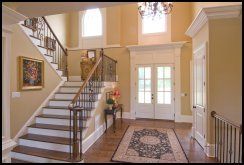
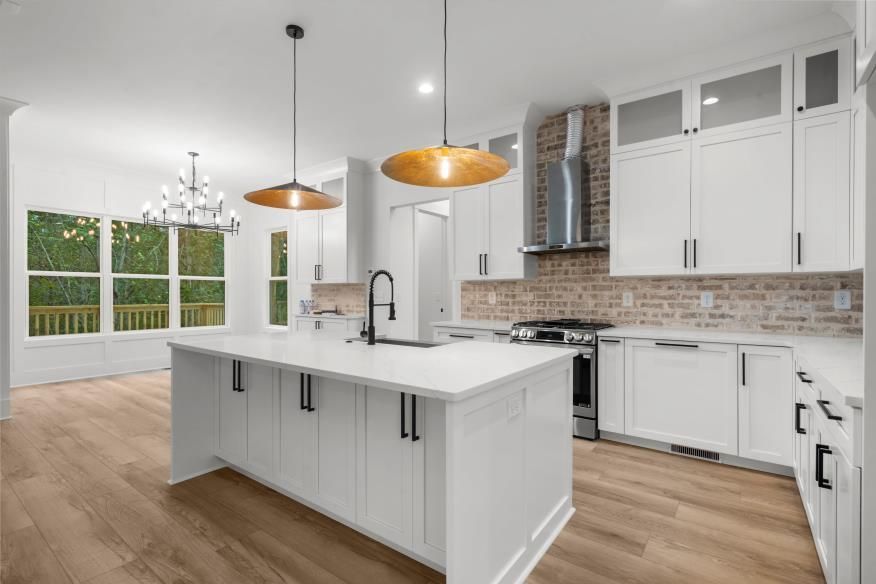
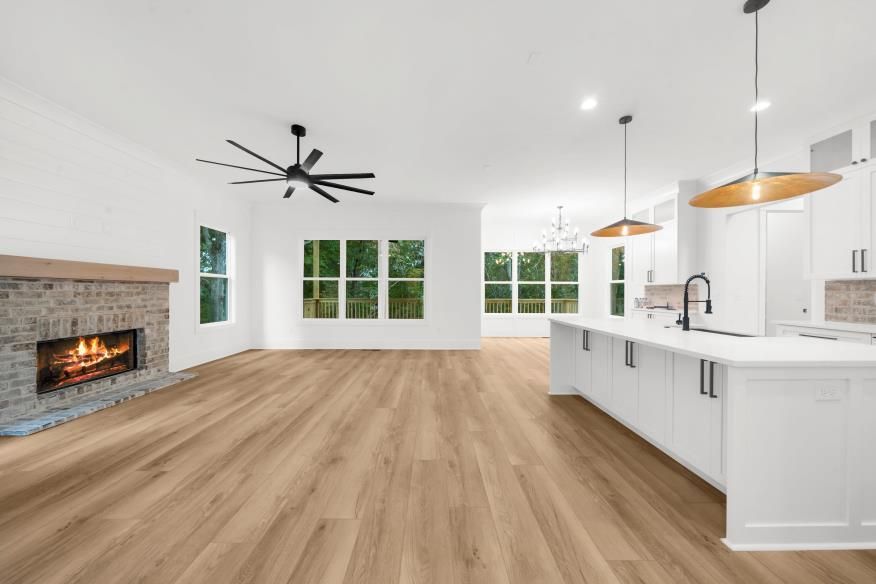
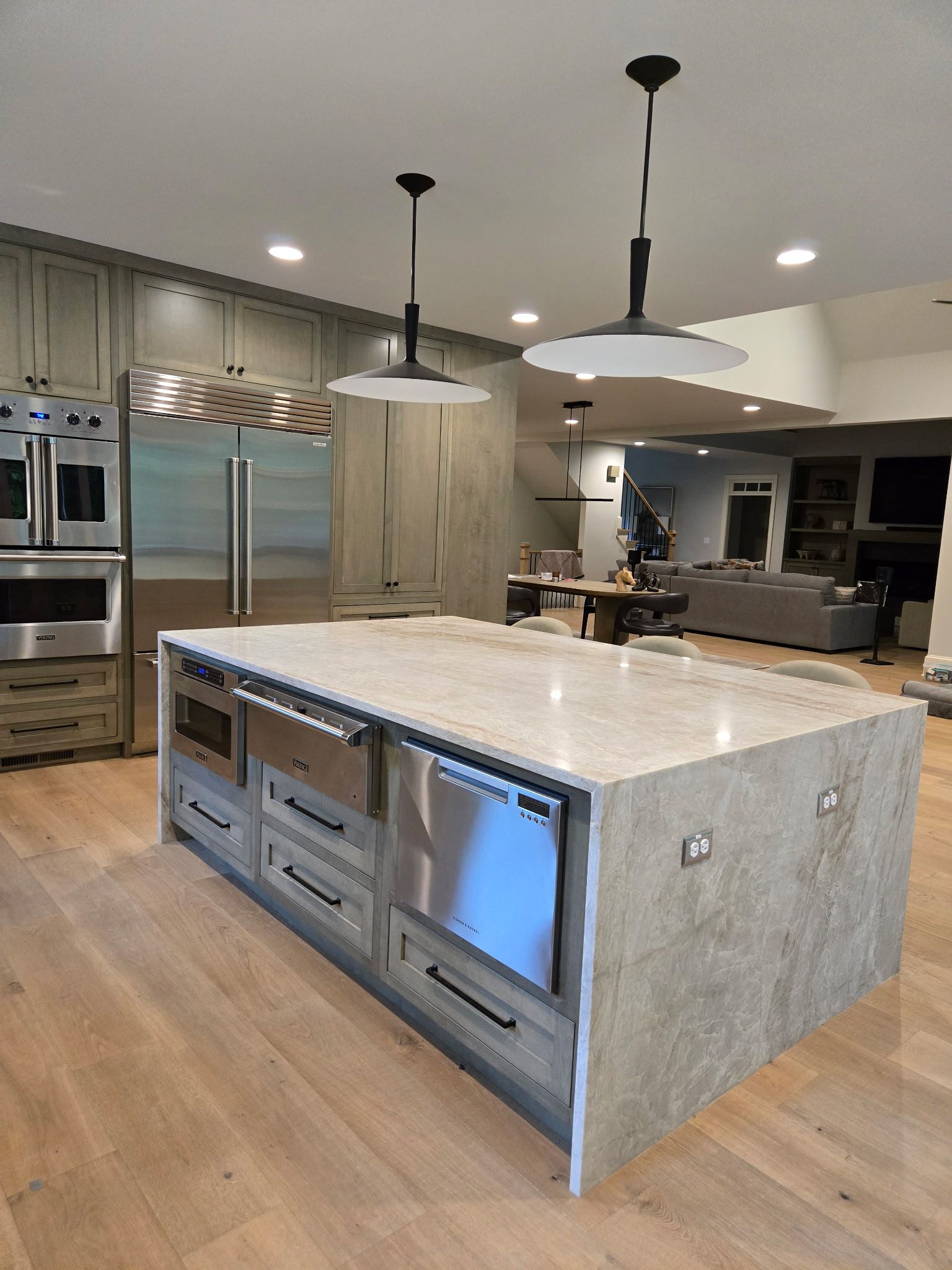
After
After
After
What You Notice After Rooms Are Reconfigured
You see unobstructed sightlines from entryways to rear windows, and natural light reaches interior hallways that were previously dependent on overhead fixtures during daytime hours. Flooring runs continuously across what were separate rooms, with grain direction planned to guide eyes toward focal points like fireplaces or picture windows. Baseboards and door casings align at consistent heights, and corners meet with tight miters that do not open as wood acclimates to indoor humidity levels. Staircases gain updated railings with balusters spaced to current code, and handrails are mounted at heights that provide secure grip for adults and children.
PBD Signature Renovations installs flooring after HVAC ductwork and electrical rough-in are complete but before final trim, so baseboards can cover expansion gaps and conceal fasteners. Hardwood is acclimated indoors for a minimum of seven days before installation, and moisture content is measured to match subfloor conditions. Tile installations include uncoupling membranes over wood subfloors to prevent cracking, and grout joints are sealed after curing. Luxury vinyl planks interlock with tight seams and are installed over level substrates to avoid telegraphing subfloor imperfections.
Lighting circuits are wired with separate neutral conductors to support smart switches and dimmers, and junction boxes are positioned to align with furniture layouts discussed during planning. Trim carpentry includes coping interior corners on baseboards and crown molding to maintain tight joints even as materials expand and contract seasonally. Paint finishes are applied after all sanding and dust-generating tasks are complete, with final coats rolled in consistent directions to avoid lap marks. You receive touch-up paint in labeled containers and care instructions for each flooring type installed.
Common Questions About Interior Updates
Homeowners in Alpharetta ask which walls can be removed without structural consequences, how long flooring installation takes, and what lighting layouts work best after walls are eliminated.
How do you know which walls are load-bearing?
Load-bearing walls typically run perpendicular to floor joists, align with foundation walls below, or support roof trusses above; confirmation requires inspecting attic framing and basement or crawlspace structure before demolition begins.
What flooring option works best for open floor plans?
Hardwood offers warmth and refinishing potential, tile provides durability in wet areas, and luxury vinyl combines water resistance with lower cost; your choice depends on traffic patterns, moisture exposure, and aesthetic preferences.
Why does trim need to be custom-milled?
Older homes often use profiles no longer available in stock sizes, so matching existing baseboards or casings requires a mill shop to replicate dimensions and details for consistent appearance.
When should lighting be adjusted after removing walls?
Open layouts need different fixture placement than closed rooms, with recessed cans spaced to avoid shadows, pendants centered over islands or tables, and task lighting directed at countertops or reading areas.
How are flooring transitions handled between rooms?
Transitions use T-molding for equal-height floors, reducers where thickness differs, and thresholds at doorways to cover expansion gaps while allowing materials to move independently with seasonal changes in Alpharetta.
Set up a consultation with PBD Signature Renovations to walk through your home, identify which changes will open sightlines and improve flow, and determine how existing finishes integrate with new materials in Alpharetta.